
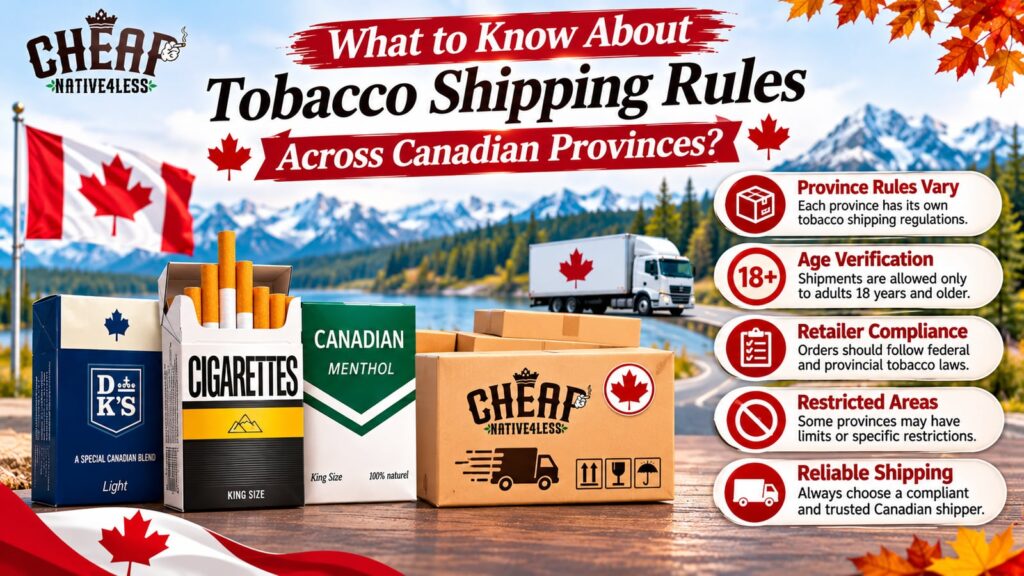
Tobacco shipping in Canada involves more than selecting a delivery service and providing a destination address. Federal legislation, provincial tobacco regulations, age restrictions, excise duties and postal requirements all influence how tobacco products can be transported and delivered.
For Canadian consumers and businesses, understanding the tobacco shipping rules across Canadian provinces is essential for staying informed about applicable regulations. Whether considering cigarettes, cigars, pipe tobacco or other tobacco products, knowing how federal and provincial requirements work together helps clarify the rules surrounding tobacco transportation.
In this guide, CheapNative4Less explores the important regulations, provincial considerations and shipping requirements that apply to tobacco products in Canada.
1. Understanding Canada’s Federal Tobacco Shipping Regulations
The federal government establishes the primary legal framework for tobacco products through the Tobacco and Vaping Products Act (TVPA) and related legislation.
One particularly important provision is Section 9.1 of the TVPA. It restricts sending or delivering tobacco products from one Canadian province to another for consideration, except where the transaction is between manufacturers or retailers or falls within a prescribed regulatory exemption.
The legislation also prohibits advertising an offer to send or deliver tobacco products between provinces.
These requirements are important because they distinguish commercial interprovincial tobacco transportation from other permitted circumstances.
Before arranging any shipment, businesses should determine whether the transaction falls within a legally permitted category.
2. How Tobacco Shipping Rules Differ Across Canadian Provinces
Although federal legislation applies throughout Canada, provincial governments establish additional requirements concerning tobacco sales, taxation, minimum purchasing ages and retail activities.
Understanding these differences is particularly important when considering tobacco regulations across provincial borders.
Provincial Age Restrictions
The minimum legal age for purchasing tobacco is not identical across Canada.
For example:
- Manitoba: Tobacco sales are restricted to individuals aged 18 and older.
- Ontario: The minimum purchasing age is 19.
- British Columbia: Individuals must be at least 19 to purchase tobacco.
- Saskatchewan: The minimum purchasing age is 19.
- Prince Edward Island: The minimum purchasing age is 21.
- Quebec and Alberta: The minimum purchasing age is 18.
These examples demonstrate why checking the destination province’s current requirements is important.
Businesses involved in regulated tobacco transactions must apply the relevant age-verification requirements rather than assuming that one province’s rules apply everywhere.
Provincial Tobacco Taxes
Tobacco taxation is another important consideration.
Different provinces apply their own tobacco tax structures, alongside federal excise duties. These taxes influence the legal requirements for tobacco products entering the duty-paid market.
Retailers and other regulated businesses must understand the applicable tax obligations, registration requirements and product-marking rules.
3. Canada Post Regulations for Shipping Tobacco Products
Canada Post classifies tobacco as a controlled mailing item. Its requirements are particularly important for anyone researching Canadian tobacco shipping regulations.
According to Canada Post, tobacco products are generally non-mailable from one province or territory to another unless one of the specified exceptions applies:
- The shipment is between manufacturers or retailers.
- The shipment is between two consumers.
- The mailer is otherwise expressly permitted under federal law.
Canada Post also requires proof of age for tobacco shipments, except for shipments between manufacturers or retailers and between two consumers.
The person originating the shipment remains responsible for ensuring compliance with the Tobacco and Vaping Products Act.
These requirements demonstrate that carrier acceptance and legal permission are separate considerations. A shipment must satisfy both applicable legislation and the carrier’s mailing conditions.
4. The Importance of Tobacco Excise Stamps
Excise stamps are an essential part of Canada’s tobacco taxation and compliance system.
The Canada Revenue Agency (CRA) administers the excise stamping framework. Generally, tobacco products sold to consumers in Canada must carry the appropriate excise stamp.
These stamps help demonstrate that applicable federal excise duty has been paid.
What Should Consumers Know?
When examining tobacco packaging, consumers can look for:
- The appropriate Canadian excise stamp.
- The words indicating that duty has been paid.
- The stamp’s identifying features.
- The applicable provincial or territorial designation, where required.
Different provinces and territories participating in coordinated arrangements use different stamp colours.
The CRA explains that excise stamps help consumers identify tobacco products that have entered the legal duty-paid market.
Checking the packaging and understanding excise markings are useful parts of becoming familiar with Canadian tobacco regulations.
5. Packaging, Labelling and Product Requirements
Tobacco packaging is regulated under federal legislation, including the Tobacco Products Appearance, Packaging and Labelling Regulations.
These requirements establish standards for product packaging, health warnings and other mandatory information.
Businesses handling tobacco products must ensure that applicable packaging and labelling requirements are satisfied.
For example, federal rules establish minimum package quantities for certain products, including cigarettes, little cigars and blunt wraps.
Packaging compliance is relevant throughout the supply chain, from manufacturing and distribution to retail sale.
6. What Businesses Should Check Before Arranging Tobacco Transportation
Businesses involved in legally permitted tobacco transportation should consider several regulatory requirements before arranging a shipment.
Verify the Transaction
Determine whether the shipment qualifies under Section 9.1 of the Tobacco and Vaping Products Act or an applicable exemption.
Confirm Provincial Requirements
Review the destination jurisdiction’s tobacco legislation, applicable taxes and registration requirements.
Check Carrier Policies
Confirm that the selected transportation provider accepts the particular tobacco shipment and that all documentation and age-verification requirements are satisfied.
Review Product Compliance
Check applicable excise stamps, packaging standards and federal product requirements.
A consistent compliance review helps businesses understand their responsibilities throughout the transportation process.
7. Why Staying Updated on Canadian Tobacco Regulations Matters
Canadian tobacco legislation can change as governments update taxation policies, age restrictions and product-control requirements.
For this reason, consumers and businesses should consult authoritative government resources rather than relying exclusively on outdated online information.
Health Canada provides information about federal tobacco regulation, while provincial government websites explain jurisdiction-specific requirements. The CRA provides guidance about tobacco excise duties and stamps, and Canada Post publishes its controlled-item mailing policies.
Staying informed helps everyone involved understand the legal framework governing tobacco products in Canada.
Frequently Asked Questions
1. Can tobacco products be shipped between Canadian provinces?
Federal law restricts paid interprovincial tobacco shipments, subject to specific exceptions, including shipments between manufacturers or retailers and prescribed exemptions. Applicable legal requirements must be checked before transportation.
2. Does every Canadian province have the same tobacco purchasing age?
No. Provincial minimum ages vary. For example, Manitoba’s minimum is 18, Ontario’s is 19, and Prince Edward Island’s is 21.
3. Does Canada Post allow tobacco shipments?
Canada Post permits certain tobacco shipments under specified conditions. Interprovincial mailing is generally restricted, subject to the exceptions identified in its non-mailable matter policy.
4. What is the purpose of a tobacco excise stamp?
An excise stamp indicates that the applicable federal excise duty has been paid. It also helps identify tobacco products intended for the Canadian duty-paid market.
5. Where can Canadians find reliable tobacco shipping information?
Useful resources include Health Canada, the Canada Revenue Agency, Canada Post and the official government website of the relevant province or territory.
Conclusion
Understanding tobacco shipping rules across Canadian provinces requires awareness of federal legislation, provincial age restrictions, tobacco taxation, excise stamps and carrier policies.
For consumers and businesses alike, the most important starting point is understanding that interprovincial tobacco transportation is subject to specific federal restrictions. Provincial requirements and mailing conditions must also be considered.
CheapNative4Less encourages readers to consult current government regulations and official carrier guidelines when researching Canadian tobacco transportation requirements. Staying informed about these rules provides a clearer understanding of the responsibilities involved in Canada’s regulated tobacco market.